


100 DAYS
THAT CHANGED THE WORLD
Co-founders of the Brennus Institute, the authors recount the hundred days leading up to Donald Trump’s re-election. One hundred days of dramatic upheavals in the international balance of power. American and European leaders made a final attempt to save Western domination of the world’s ‘Grand Chessboard’. They failed. The BRICS summit in Kazan, Russia, sounded the death knell for American-style globalism. Discover the behind-the-scenes world of international politics: calculations, dirty tricks, panic and strategic manoeuvres emerge from every page of this book, which paints a picture of a geopolitical landscape very different from the discourse of our leaders, who are overwhelmed by the changes taking place.


DECOLONISE EUROPE – GERMANY NEEDS TRUE REUNIFICATION
In their new book, Edouard Husson, originally from France, and Ulrike Reisner, originally from Austria, take a special look at Germany after the 2025 federal elections. They examine the political division in Germany, whose roots go back a long way. The authors outline German foreign and economic policy and highlight examples of poor decisions made in recent decades. The obvious geopolitical reluctance that German policy has long been accused of in Europe is critically examined in an assessment of Euro-Atlantic alliance policy since the end of the Cold War. The authors attempt to show that the special relationship between the United States and Germany has become a major obstacle to Europe’s reorientation in the new multipolar world order.
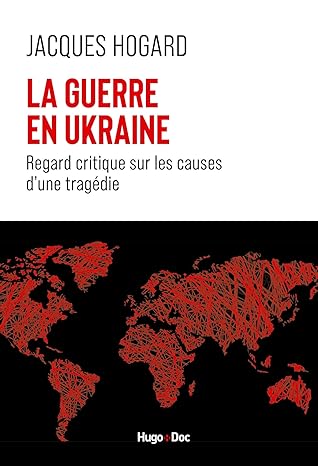
THE WAR IN UKRAINE
Jacques Hogard places particular emphasis on the responsibility of the United States of America – especially in terms of disinformation – pointing the finger, as in a number of modern conflicts, the foreign policy of the United States and NATO’s eastward expansion, as their desire to prevent the emergence of a Europe of sovereign and independent nations, even if it means pushing Russia into the arms of China, an unnatural alliance that is dangerous for Europe and world peace.

PARIS-BERLIN: THE SURVIVAL OF EUROPE
Thirty years after the fall of the Berlin Wall, new and deep divisions threaten Europe, the Franco-German duo that has been its driving force, and Germany itself. Faced with Brexit and the ambitions of the United States and China, it is vital that the two countries on either side of the Rhine rebuild their partnership. To do so, they must get to know each other again.
Today, however, there is a double misunderstanding: France observes Germany with passion, whether to hate or imitate it, while Germany hesitates between admiration and condescension, with neither side really understanding the other anymore – particularly the French elites, who have an outdated view of our neighbour.
This book takes an incisive look at Germany, drawing on a deep knowledge of its culture and politics, experiences and encounters. It puts Germany into perspective since the end of Nazism and then communism, through reunification, to the long tenure of Chancellor Merkel, who is facing the challenge of migration and the resurgence of the far right, while the economic and social model, once so admired, is reaching its limits.
This plea sheds light on the paths that Paris and Berlin can forge together to ensure Europe’s revival.

EUROPE DIED IN PRISTINA
When the events in Kosovo that made headlines in the autumn of 1998 unfolded, Jacques Hogard was a senior officer serving in the Special Operations Command (COS). Thus, at the very beginning of 1999, he took command of the Joint Special Forces Group, which France deployed in Macedonia and then in Kosovo, alongside our American, British, German and Italian allies.
After several months of suspense, NATO launched its war against Serbia on 23 March 1999 following the failure of the Rambouillet negotiations.
What Jacques Hogard and his men then discovered on the ground was that the reality of the situation bore no resemblance to what was being reported in the Western media.
A man of character and strong convictions, Colonel Hogard experienced this final operation in Kosovo with great intensity. It left him with a bitter feeling of irresponsible involvement in an unjust conflict, symbolic of all the failures and betrayals of France and Europe.

ANOTHER GERMANY
For a long time, French leaders envied their counterparts in the Federal Republic: Germany was better able to withstand the global crisis triggered by the oil shocks of the 1970s. In fact, after 1945, West Germany had undergone an unprecedented reconstruction and then established itself as one of the major exporting countries because, it was said, entrepreneurship was more highly valued there, the state was less spendthrift and the trade unions were more reasonable than in France. The German ‘model’ was praised, symbolised by the strength of the Deutsche Mark, which had become an unofficial reserve currency for investors around the world.
Then came the end of the Cold War and the collapse of the Soviet Union. West Germany integrated the GDR. From then on, the continent’s economic engine was also its leading political power. However, Germany did not abuse this newfound power, except in the former Yugoslavia: its population is largely pacifist; above all, since the mid-1990s, the Federal Republic has entered a deep economic crisis that calls into question the ‘German model’. Suffering from the excessive burden of public spending and social security contributions, Germany is becoming increasingly similar to France.
Édouard Husson therefore invites us to take a fresh look at our neighbour: a country whose power we should fear less than its weakening; a nation threatened by demographic decline; the fragile industrial heart of a European continent that risks being a major loser in globalisation.